
You’re in the middle of a sentence, and you can’t remember the next word; you walk into a room, forgetting why you’re there. This is brain fog. It isn’t a medical symptom but a collection of symptoms which include:
- Difficulty concentrating or paying attention
- Problems with short-term memory
- Difficulty with word-finding
- Becoming overwhelmed by simple tasks
- Slowed processing (slower to take in information and formulate a response)
- Overall feeling “cloudy”
Brain fog can be a symptom of many conditions; however, I will be discussing menopausal brain fog.
We carried out a survey with women about their menopausal symptoms, and over 60% of women reported brain fog. It’s a common and real part of the transition that should not be overlooked. Current research is presented to help clinicians normalise and validate cognitive complaints in their patients.
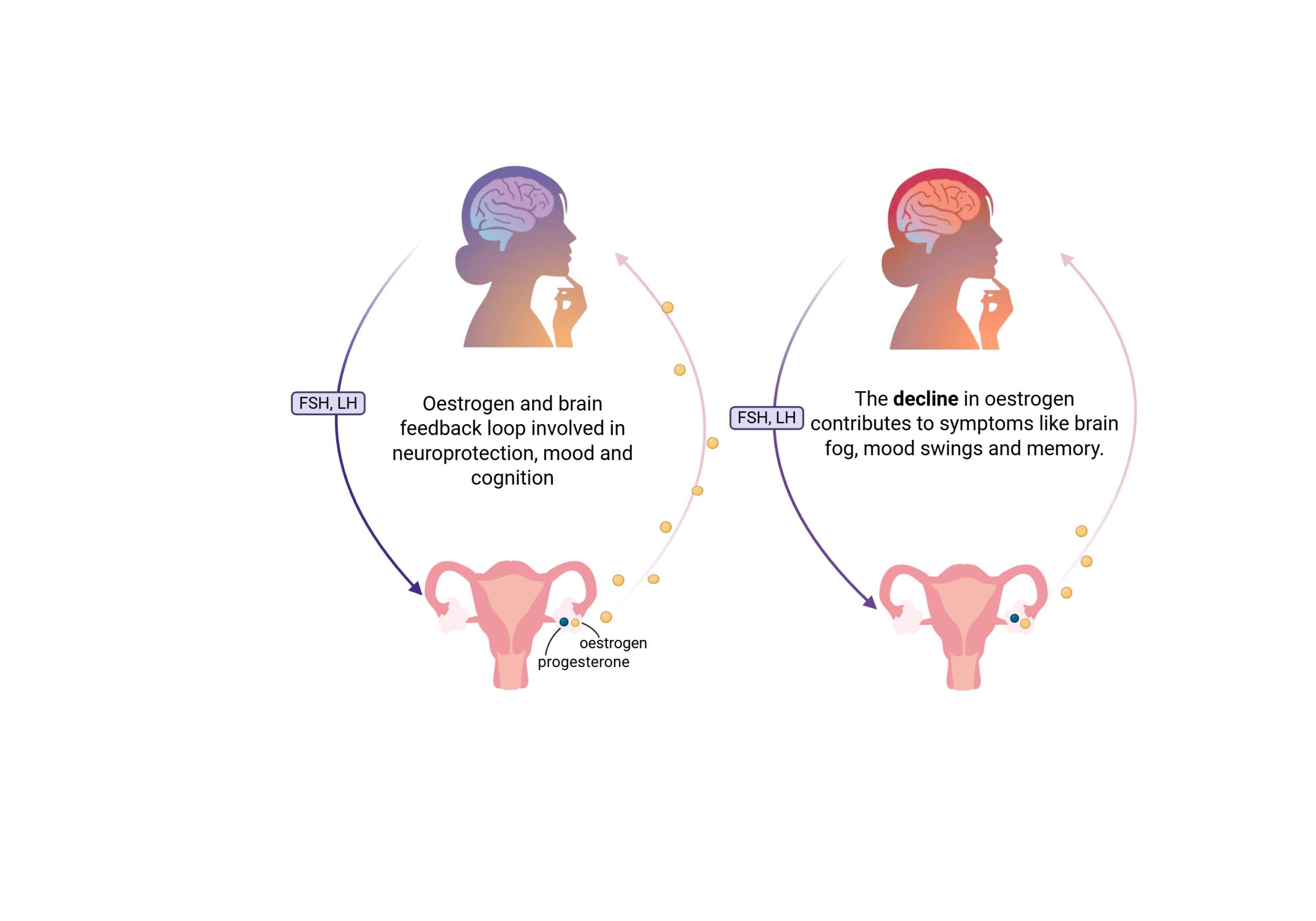
Menopausal brain fog can be due to an accumulation of factors; however, a key driver is the declining oestrogen and progesterone.
Oestrogen’s Multiple Effects on Brain Function:
Oestrogen is vital for brain health, supporting neurotransmitter activity, maintaining healthy blood flow to the brain and neuroprotection, influencing areas critical for memory (hippocampus) and mood (prefrontal cortex).
As oestrogen levels begin to fall in perimenopause, your entire body, including your brain, goes into a deprivation state. At a cellular level, oestrogen promotes the uptake of glucose, the brain’s number one energy source. Therefore, the overall reduction in the brain’s energy during menopause can trigger both the vasomotor and psychological symptoms of menopause, such as brain fog.
The good news is that we can support brain health with simple lifestyle changes.
Coming out of the Fog
- Supporting your Gut Microbiome
As I often mention, our gut microbiome is fundamental to supporting brain health. Nourish your gut with prebiotic foods such as bananas, blueberries, rye, nuts and plenty of vegetables. Probiotic foods contain live bacteria, which increase the amount of beneficial microbes. A stable diverse microbiome produces metabolites which support brain health by regulating mood, reducing inflammation and influencing cognition.
- Incorporate More Brain Foods:
A diet rich in polyunsaturated fats, such as omega 3 and 6, which you can find in fish, nuts and seeds. Berries, which contain antioxidant properties; whole grains, which contain vitamin B (essential for supporting brain function and nerve health); and dark chocolate, which contains flavonoids.
- Exercise Regularly
There is a wealth of research showing the importance of exercise to boost brain health. Exercise increases blood flow to the brain, delivering more oxygen and nutrients, reduces inflammation, and stimulates neurogenesis (the growth of new neurones). Collectively, these effects enhance cognitive function and memory. In fact, many studies demonstrate that regular exercise can significantly improve memory and reduce the risk of cognitive decline and dementia.
Experiencing brain fog throughout menopause is both common and valid, with approximately two-thirds of women reporting cognitive changes during this transition. Increasing awareness of menopause-related brain symptoms is vital. Early recognition allows for better support, validation, and management strategies for women navigating this stage of life.