
Polyphenols are a category of compounds naturally found in plant food. They boast a wide range of health benefits due to their antioxidant and anti-inflammatory properties. Polyphenols are potent health-boosting compounds. We’ll walk through the main types, what they do for your health, and where you can find them in your daily diet.
Polyphenol’s Benefits Start in the Plant:
Polyphenols act as a natural defence system, protecting plants from pathogens, UV damage, and herbivores with their antifungal and antibiotic properties. They also support growth by regulating key hormones. Plus, they provide the vibrant colours of many fruits and plants, helping attract pollinators and signalling high polyphenol content.
Role of Polyphenols in the Body:
Research shows that polyphenols are linked to a reduced likelihood of heart attacks, strokes, and diabetes. Dietary polyphenols also contribute to healthier cholesterol levels, better blood pressure control, improved insulin sensitivity, and lower overall inflammation. Collectively, these mechanisms highlight the significant role polyphenols play in maintaining long-term metabolic and cardiovascular health.
Polyphenols and the gut-brain axis
The possible therapeutic benefits of dietary polyphenols may stem, at least partly, from their bi-directional interaction with the gut microbiome. Research has shown that the gut microbiome can convert polyphenols into bioactive compounds that can then be absorbed by the body and exert beneficial effects, such as antioxidant, anti-inflammatory, and other health-promoting actions.
Additionally, polyphenols promote the growth of beneficial gut bacteria, like Bifidobacterium and Lactobacillus. Both support brain health by influencing the gut-brain axis, reducing inflammation, producing short-chain fatty acids, and influencing neurotransmitters. These have been shown to improve cognitive function and reduce symptoms of anxiety and depression and improve our overall mental wellbeing in both animal and human studies.
Types of Polyphenols
Scientists have identified over 8,000 polyphenols, which have been spit into four major groups based on their chemical structure…
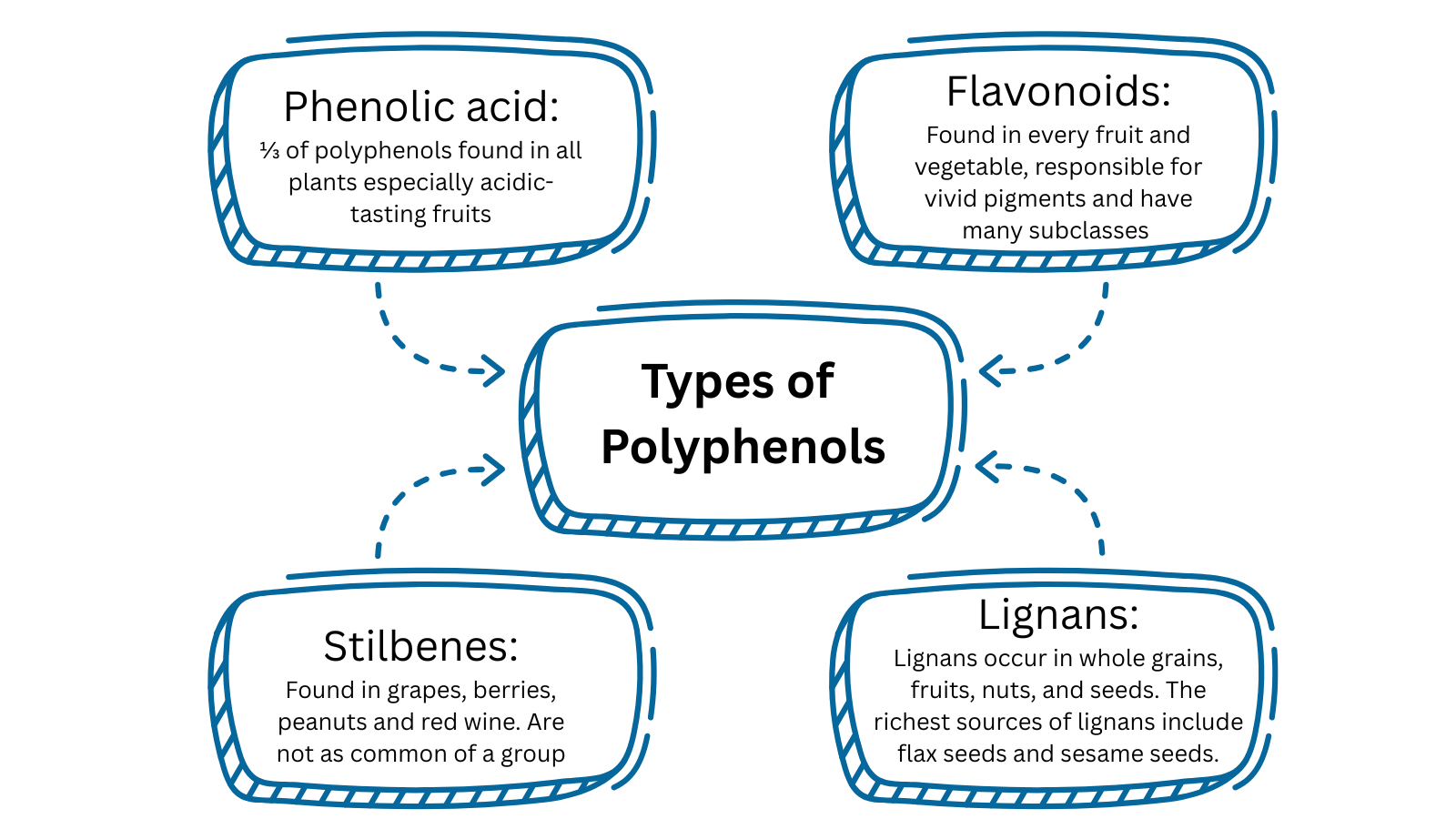
Polyphenols have huge potential to optimise our health and support our everyday lives; now that we know this, let’s look at what foods we can integrate into our diets to reap the benefits from these superfoods.
What are the main food sources of polyphenols?
| Category | Food/Beverage | Polyphenols (mg per 100g / 100ml) |
| Spices, Herbs & Seeds | Cloves | 15,188 mg / 100g |
| Peppermint | 11,960 mg / 100g | |
| Star anise | 5,460 mg / 100g | |
| Mexican oregano | 2,319 mg / 100g | |
| Celery seed | 2,094 mg / 100g | |
| Flaxseed meal | 1,528 mg / 100g | |
| Sage | 1,207 mg / 100g | |
| Rosemary | 1,018 mg / 100g | |
| Cocoa & Chocolate | Cocoa powder | 3,448 mg / 100g |
| Dark chocolate (70–85% cacao) | ~1,664 mg / 100g | |
| Fruits | Black chokeberry | 1,756 mg / 100g |
| Black elderberry | 1,359 mg / 100g | |
| Blackcurrant | 756 mg / 100g | |
| Plum | 377 mg / 100g | |
| Blackberry | 260 mg / 100g | |
| Strawberry | 235 mg / 100g | |
| Vegetables, Beans & Olives | Black olive | 569 mg / 100g |
| Globe artichoke hearts | 260 mg / 100g | |
| Red onion | 168 mg / 100g | |
| Beverages | Filtered coffee | 214 mg / 100g |
| Red wine | 101 mg / 100ml | |
| Black tea | 102 mg / 100g | |
| Green tea | 89 mg / 100g | |
| Extra-virgin olive oil | 62 mg / 100g |