Down Syndrome is the most prevalent genetic cause of intellectual disability, characterized by a triplication of chromosomes. Down Syndrome (DS) manifests a spectrum of symptoms, including early onset of menopause.
Menopause is a major transitional phase in a woman’s life that encompasses both physical and emotional changes. The onset of menopause occurs earlier in women with intellectual disabilities, and even earlier in women with Down Syndrome. The median age of menopause in women with DS is around 44–46 years, compared to 50–52 years in the general population.
Menopause is a challenging time for every woman, especially those with Down Syndrome. Describing their symptoms can be challenging, and it is often caregivers who first notice these changes. Changes in mood, cognition, and memory are common during perimenopause; however, these symptoms often get overlooked in women with Down Syndrome as they are seen as symptoms of the condition rather than symptoms of menopause.
Additionally, these brain changes can be exacerbated by other symptoms, like anxiety and disrupted sleep, creating a cycle of stress and cognitive fatigue that can be challenging to manage. Some women with Down Syndrome report confusion and memory difficulties as they undergo the menopause transition, however, this is a known symptom of menopause and can often be difficult to determine whether this is solely due to menopause or due to early onset Alzheimer’s disease.
How Hormonal Changes Impact Aging and Cognition in Down Syndrome
Research has shown that the Down Syndrome population have an increased risk of early onset Alzheimer’s disease. Approximately 40-80% of Down Syndrome individuals develop Alzheimer’s disease by the 5th or 6th decade of life, a much younger subgroup than the neurotypical population. This population has a short interval between the age of menopause and the potential onset of Alzheimer’s disease. Moreover, research has shown that early age of menopause and low oestrogen levels are associated with an earlier age of onset of Alzheimer’s disease.
Furthermore, studies indicate that an earlier age of menopause and lower oestrogen levels are linked to an earlier onset of Alzheimer’s disease. These findings support a hypothesis that reductions in oestrogen post menopause contribute to the cascade of pathological processes leading to Alzheimer’s and accelerates its development in high-risk women such as Down Syndrome.
Supporting Women with Down Syndrome Through the Menopausal Transition
Because women with Down syndrome may experience menopause earlier and sometimes with more intense symptoms, it’s essential to provide tailored support. Caregivers and healthcare professionals should be aware that women with Down Syndrome might have difficulty recognising or communicating menopausal symptoms, such as changes in mood, sleep, or menstruation.
Support strategies should include:
- Regular health checks to monitor hormonal changes and cognitive function.
- Regular visits to your general practitioner can help, as well as caregivers paying attention and recognising behavioural changes.
- Educate women with Down Syndrome on the changes that occur during menopause.
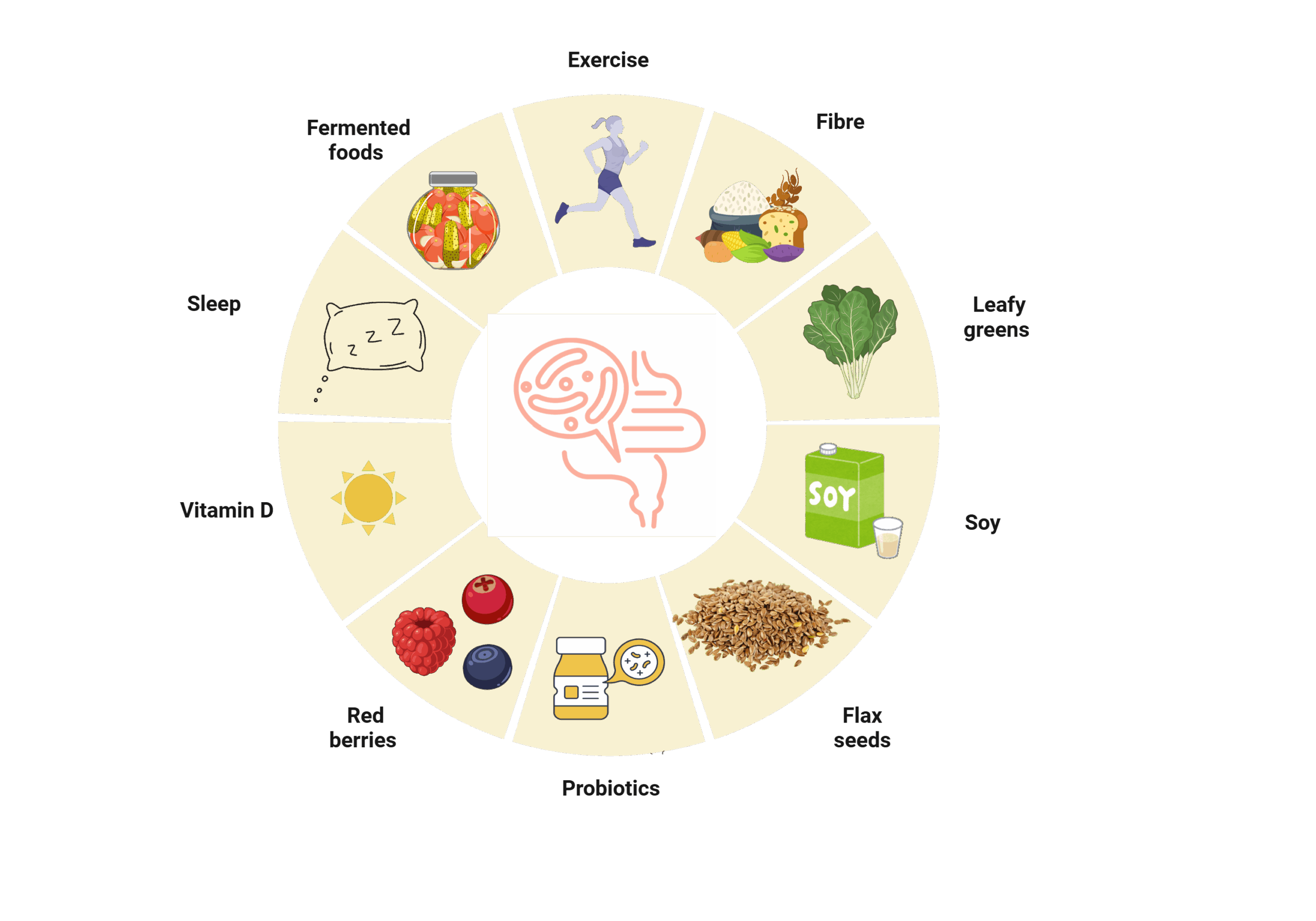
- Engage in physical activity and look after the gut microbiome.
- Many studies have shown that physical activity plays a major role in protecting the Down Syndrome population from early cognitive decline. Additionally, the gut has bidirectional communication with the brain and our research has shown that a healthy microbiome can support cognition and reduce anxiety and depression.
How Can I Support My Microbiome?